What AI skills should my team learn first?
Your team should learn the AI skills tied to the tasks they already do, not a generic course a manager guessed at. Build a one-page skills map from real weekly tasks. Mark which ones eat time and which ones AI can help with. Then run a 4-week practice plan using the tools you already pay for. Skills stick when they solve a real job.
TL;DR
Your team should learn the AI skills tied to the tasks they already do, not a generic course a manager guessed at. Build a one-page skills map from real weekly tasks. Mark which ones eat time and which ones AI can help with. Then run a 4-week practice plan using the tools you already pay for. Skills stick when they solve a real job.
- Most AI training fails because managers pick the topics, not the people doing the work.
- A skills map is one page: list real tasks, mark the slow ones, mark the ones AI can touch.
- A 4-week practice plan beats a one-day workshop that gets forgotten by Friday.
- Use the tools your team already has before buying new ones.
- Principal Financial Group trained over 90% of its 19,000 employees in AI, but its CHRO says the tools only pay off when people apply judgment.
Why does most AI training miss?
Most AI training misses because a manager picks the topics from a slide deck instead of from the actual work. Someone books a workshop on prompts. The team sits through it. Monday comes and nobody changes a thing. The training never touched a task anyone actually does.
Skills stick when they solve a job that already annoys someone. They fall off when they are abstract. A course on "prompt engineering" means nothing to a person who spends Tuesdays copying invoices between two systems.
The Project Management Institute found that roughly three in four executives say AI is the main reason they are rethinking their business. That energy usually turns into a generic training budget. The money buys attendance, not skill.
What is a one-page skills map?
A skills map is a single sheet listing the real tasks your team does each week, marked for two things: how much time each one eats, and whether AI can help with it. It is not a training catalog. It is a picture of the actual work. You build it from what people do, not from what a vendor sells.
The point is to stop guessing. A manager staring at a course list is guessing. A team looking at its own task list is not.
Keep it to one page on purpose. If the map runs three pages, you are cataloging the whole job instead of finding the two or three tasks worth practicing on.
| Task | Time per week | Can AI help? | Tool we already have |
|---|---|---|---|
| Writing follow-up emails | 3 hours | Yes, drafting | ChatGPT / Copilot |
| Summarizing call notes | 2 hours | Yes, summary | Otter / built-in notes |
| Copying data between systems | 4 hours | Partly | Spreadsheet + script |
| Approving a discount | 1 hour | No, needs judgment | None |
How do you build the skills map from real tasks?
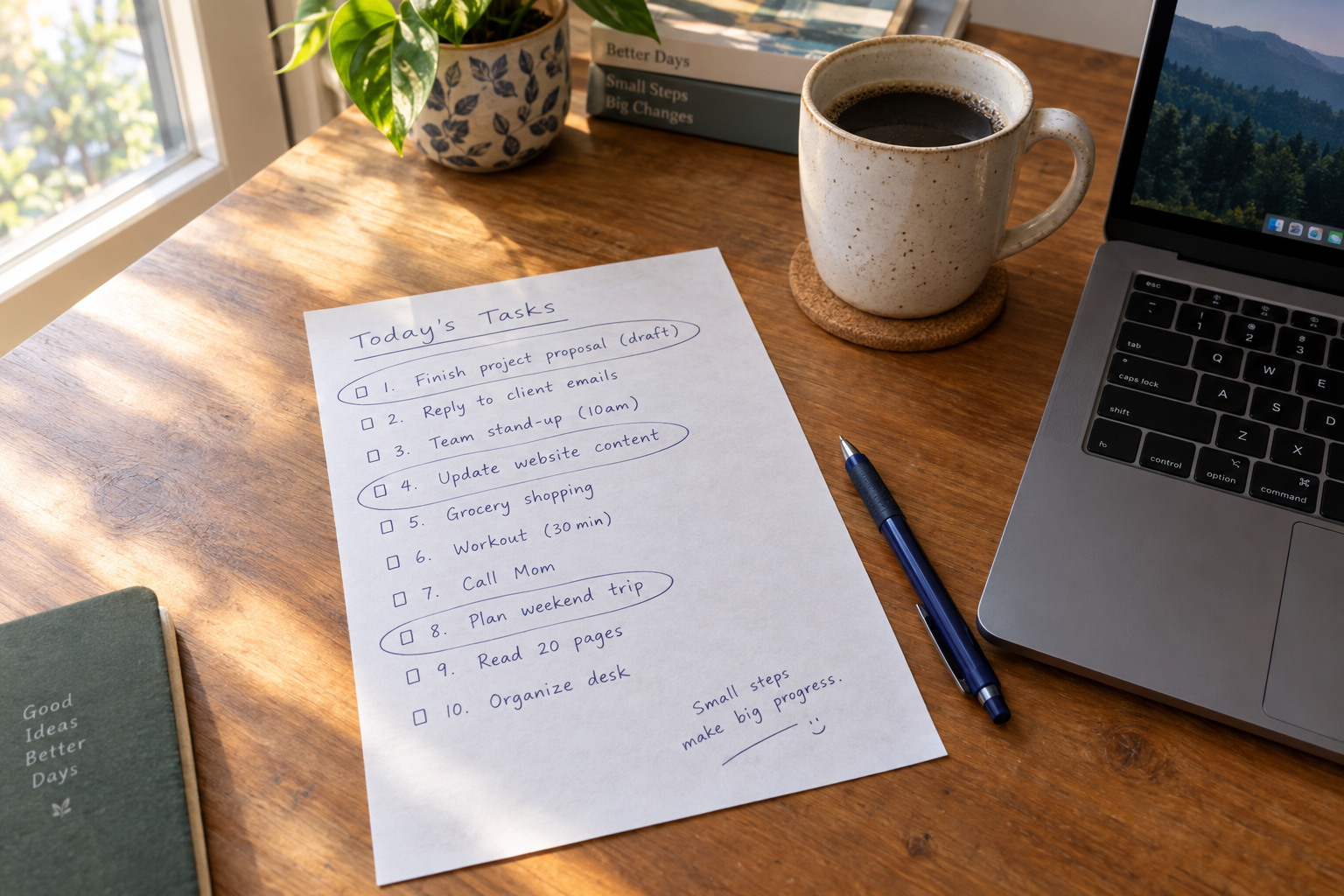
You build the skills map by having each person write down what they actually did last week, then marking the slow tasks and the ones a tool could help with. It takes an afternoon, not a consulting engagement. The list comes from the people doing the work, because they know where the time goes.
- Ask each person to log their real tasks for one week. Plain notes are fine.
- Circle the tasks that eat the most time. Those are your candidates.
- For each candidate, ask one question: could a tool draft, summarize, or sort this?
- Mark the tasks that need human judgment. Leave those alone.
- Match each remaining task to a tool you already pay for.
Run it manually for a week first. If a person can't write down what they do, no model can do it for them. The log is the whole trick.
The tasks that need judgment stay on the human. A discount approval is a judgment call. Lisa Coulson, the CHRO at Principal Financial Group, put it plainly: the AI insight only creates value when a person applies context to it.
How do you turn the map into a 4-week practice plan?
You turn the map into a plan by picking one marked task per week and practicing only that task with a tool you already have. Four tasks. Four weeks. No new software until the plan proves out. Practice beats a workshop because the skill lands on a real job, not a slide.
- Week 1: Pick the slowest task on the map. Practice it daily with one tool.
- Week 2: Add a second task. Keep doing the first.
- Week 3: Add a third. Write down what worked and what broke.
- Week 4: Review the map. Drop what didn't help. Keep what saved time.
One task a week is enough. People learn by repeating a real job, not by watching a demo. By week four they own three tasks they didn't own before.
Tie the plan to time. If a person spends 30 minutes a day drafting the same emails, that's a day a month. A day a month is real money. That number is why the practice sticks.
When is AI the wrong skill to teach?
AI is the wrong skill to teach when the task needs judgment, trust, or a hard rule you can't afford to get wrong. A tool can draft an email. It should not approve a refund, fire a customer, or sign off on a safety call. Teach people to spot that line, not to cross it.
Coulson at Principal Financial Group trained over 90% of her 19,000 people in AI, then doubled down on emotional intelligence. The lesson is simple. The tool handles the busywork. The person handles the call that matters.
The judgment tasks on your map are not a gap to close. They are the work worth keeping human.
Which tools should the plan use?
The plan should use the tools your team already pays for before you buy anything new. Most small businesses already own a chat assistant inside their email or office software. Start there. A new tool adds a login, a bill, and a training curve nobody asked for.
Pick the workflow first. The tool comes after. Most businesses do this backwards and end up paying for software they don't use.
NiteShyft said its platform ran more than 2,000 business tasks in private testing before opening to the public in October 2026. Impressive or not, a launch is a launch. Match the tool to the tasks on your map, then decide if you even need it.
Key Takeaways
- AI training fails when managers pick the topics instead of the people doing the work picking the tasks.
- A one-page skills map lists real weekly tasks, marks the slow ones, and marks the ones AI can touch.
- A 4-week practice plan of one task per week beats a single workshop that gets forgotten by Friday.
- Tasks that need human judgment stay with the human; the tool handles the repeat work.
- Use the tools you already pay for before buying new software with a new login and a new bill.
- Tie the plan to saved time in dollars, because a day a month back is the reason the skill sticks.
FAQ
How do I start an AI upskilling plan for a small team?
Start by having each person log their real tasks for one week, then build a one-page map marking the slow tasks and the ones a tool could help with. Pick the slowest task and practice it for a week with software you already own. Add one task a week for four weeks. Skip the generic course.
What should be on a skills map?
A skills map should have four columns: the task, how much time it eats each week, whether AI can help with it, and which tool you already have for it. Keep it to one page. The list comes from what your team actually does, not from a vendor's course catalog or a manager's best guess.
How long does AI upskilling take for a small business?
A focused AI practice plan takes about four weeks, one task per week, using tools you already pay for. That beats a one-day workshop because the skill lands on a real job people repeat. Do not expect a single training session to change how anyone works. Repetition on a real task is what makes it stick.
Which AI tasks should stay human?
Tasks that need judgment, trust, or a rule you can't afford to break should stay human. Approving a refund, handling an upset customer, or signing off on a safety call belong to a person. Principal Financial Group's CHRO trained over 90% of her staff in AI, then leaned harder into emotional intelligence for exactly this reason.
Do I need to buy new AI software to train my team?
No, most small businesses already own an AI assistant inside their email or office software. Start with what you have before adding a new tool, a new bill, and a new login. Pick the workflow first and the tool second. Buying software before scoping the tasks is how you end up paying for a product nobody opens.
Sources
- https://www.forbes.com/sites/kevinkruse/2026/08/31/this-chro-upskilled-90-of-her-workforce-in-ai-then-she-doubled-down-on-ei/
- https://time.com/branded-content/project-management-institute/the-skills-that-will-dictate-the-winners-and-losers-in-the-new-world-of-work/
- https://markets.businessinsider.com/news/stocks/niteshyft-announces-october-launch-of-ai-business-operating-platform-for-small-companies-1036530656
- https://www.bdaily.co.uk/articles/2026/09/06/ai-pilot-aims-to-bridge-skills-gap